For years, B2B technology marketing operated under a straightforward mandate: generate leads at scale. Marketing teams built high-volume engines designed to drive website traffic, capture contact details via gated whitepapers, and hand off Marketing Qualified Leads (MQLs) to sales teams.
However, the B2B buying dynamic has undergone a fundamental transformation. Modern purchasing decisions are rarely made by isolated individuals; they are navigated by complex, multi-stakeholder buying groups operating within strategic accounts. As a result, relying strictly on individual lead volume as a proxy for pipeline health creates friction, misaligned teams, and inefficient spend.
To maintain growth, Chief Marketing Officers (CMOs) are transitioning from traditional, lead-centric demand generation to Go-To-Market (GTM) strategy orchestration. This article explores the current state of GTM orchestration and outlines the top 10 considerations for CMOs leading this transition.
The State of B2B Marketing GTM Orchestration
GTM strategy orchestration shifts the core unit of planning, execution, and measurement from the individual contact to the account and its buying group. Rather than running disconnected channel tactics, orchestration aligns marketing, sales, customer success, and operations around a single, unified view of the customer journey.
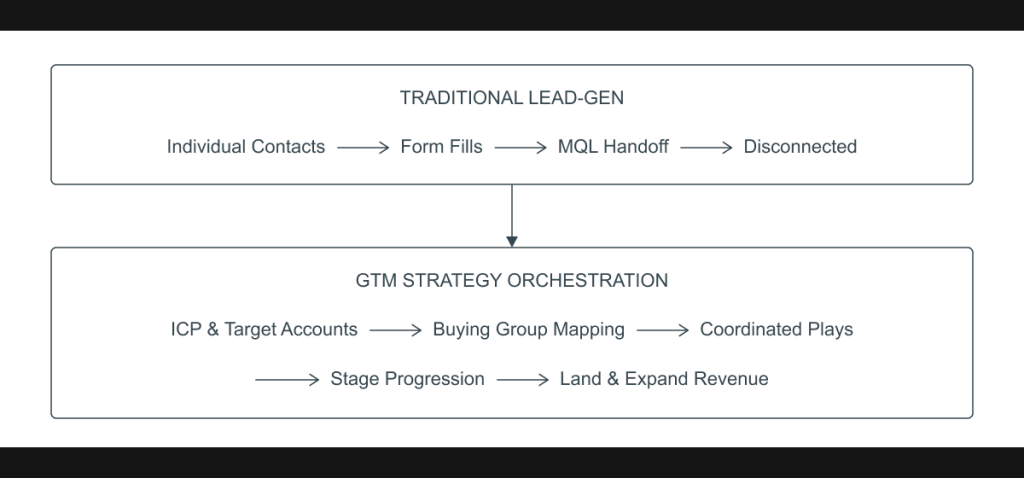
This model treats demand creation, demand capture, account-based marketing (ABM), and customer expansion not as separate functional silos, but as connected motions within a single revenue system:
- Hybrid Operating Models: Scalable 1-to-many demand generation builds category awareness across the addressable market, while precise 1-to-few and 1-to-1 ABM programs target priority accounts and active opportunities.
- The “Land & Expand” Imperative: Marketing accountability extends beyond initial customer acquisition to encompass retention, adoption, cross-sell, and upsell.
- Connective Technology: Modern platforms like Phave, integrated with CRM and Marketing Automation Systems (MAPs), serve as the orchestration layer – providing visibility into buying signals, stage progression, and cross-functional alignment.
Top 10 Considerations for CMOs
Transitioning to an orchestrated GTM strategy requires changes to technology, organizational design, data architecture, and cross-functional governance. Below are ten strategic priorities for marketing leaders.
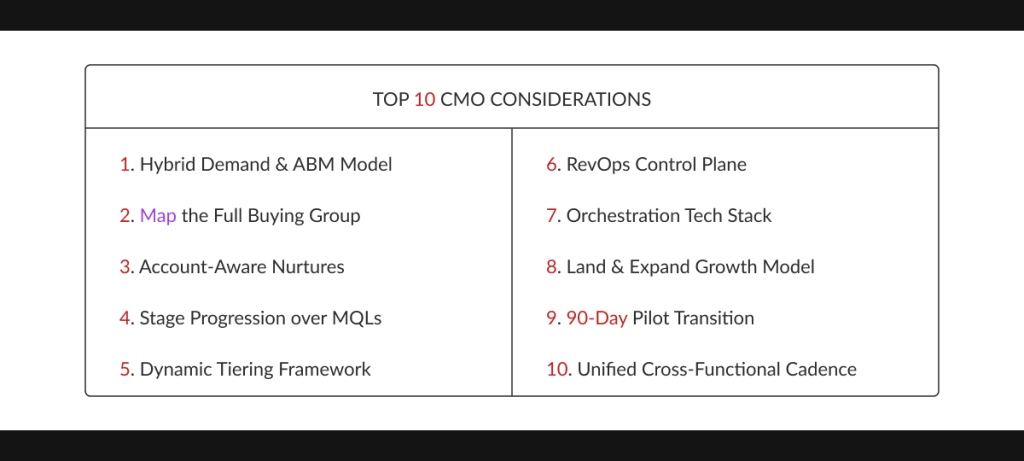
1. Balance Broad Demand Generation with Targeted ABM
ABM is not a blanket replacement for demand generation. Instead, it provides focus and coordination where account value and buying complexity justify targeted effort.
A balanced portfolio allocates resources across three distinct tiers:
- 1-to-Many: Programmatic outreach covering broad Ideal Customer Profile (ICP) segments with scaled content and automated monitoring.
- 1-to-Few: Cluster-based plays for 10–100 accounts sharing common industry drivers, vertical challenges, or business triggers.
- 1-to-One: Highly customized, account-specific strategies for high-value strategic targets featuring dedicated account plans and bespoke assets.
2. Map and Engage the Complete Buying Group
A single contact downloading a whitepaper is an engagement signal, not a fully qualified opportunity. Modern B2B buying committees often involve 6 to 10 decision-makers spanning various business units—including economic buyers, technical evaluators, end-users, compliance leads, and executive sponsors.
Orchestration platforms help teams evaluate engagement at the account level by tracking:
- Role Coverage: Which key stakeholder roles are known vs. missing within target accounts.
- Engagement Depth: Whether interactions are confined to a single champion or expanding across the broader buying committee.
- Consensus Building: How effectively multi-channel plays bring disparate buyers onto the same page.
3. Evolve Lead Scoring into Account-Aware Intelligence
Traditional lead scoring models often trigger immediate sales follow-up after an individual hits an arbitrary point threshold. In an orchestrated environment, lead scores are evaluated alongside account-level context.
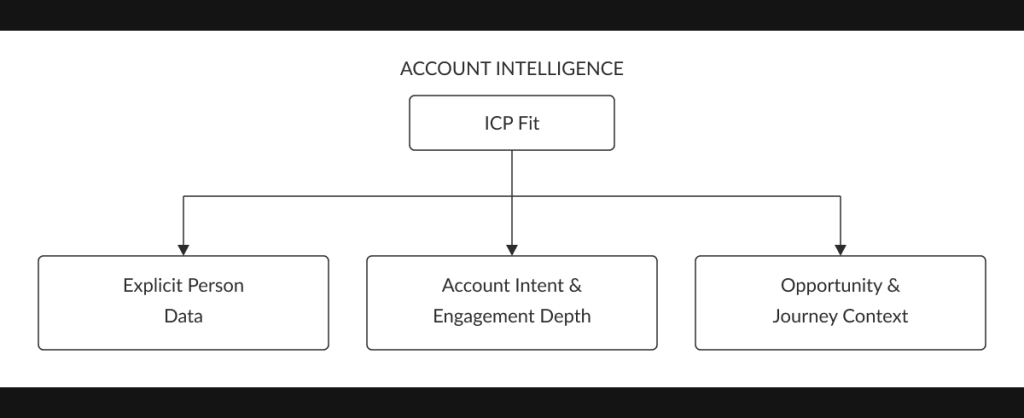
Marketing Operations should design workflows that blend explicit person-level data with account fit, intent signals, engagement depth, and opportunity stage. An influx of activity from a single contact might trigger targeted buying-group expansion campaigns rather than an immediate, unvalidated sales call.
4. Shift Metrics from Lead Volume to Stage Progression
Replacing the MQL with another single metric can obscure full pipeline health. CMOs should implement a multi-layered scorecard measuring four key dimensions:
| Scorecard Dimension | Key Metrics | Strategic Focus |
| Reach & Volume | Target accounts reached, engaged accounts, cost per engaged account. | Validates target audience engagement without relying solely on raw form fills. |
| Buying Group Coverage | Role coverage percentage, engaged stakeholders per account, data completeness. | Ensures breadth of relationships within key buying committees. |
| Pipeline Velocity | Stage conversion rates, cycle time, time-in-stage, MQA-to-meeting rate. | Identifies bottlenecks and evaluates how coordinated plays move accounts forward. |
| Commercial Impact | Sourced & influenced pipeline, win rates, ACV/ARR impact, net retention. | Connects GTM execution directly to revenue outcomes. |
5. Establish Dynamic, Contextual Account Selection and Tiering
Static account lists quickly become outdated. Account selection should be guided by a continuous hypothesis incorporating:
- ICP Fit: Industry, revenue, employee count, tech stack, and operational footprint.
- Commercial Potential: Expected deal size, lifetime value, margin, and strategic relevance.
- First- and Third-Party Intent: Spikes in topic research, technology evaluations, or hiring trends.
- Capacity Rules: The bandwidth of sales reps and field marketers to execute personalized outreach.
Clear entry and exit rules ensure accounts transition dynamically between tiers based on changing intent signals and engagement levels.
6. Position Marketing Operations and RevOps as the Core Control Plane
GTM orchestration requires clean, connected data architecture. Marketing Operations (MoOps) and Revenue Operations (RevOps) serve as the connective engine across the revenue stack.
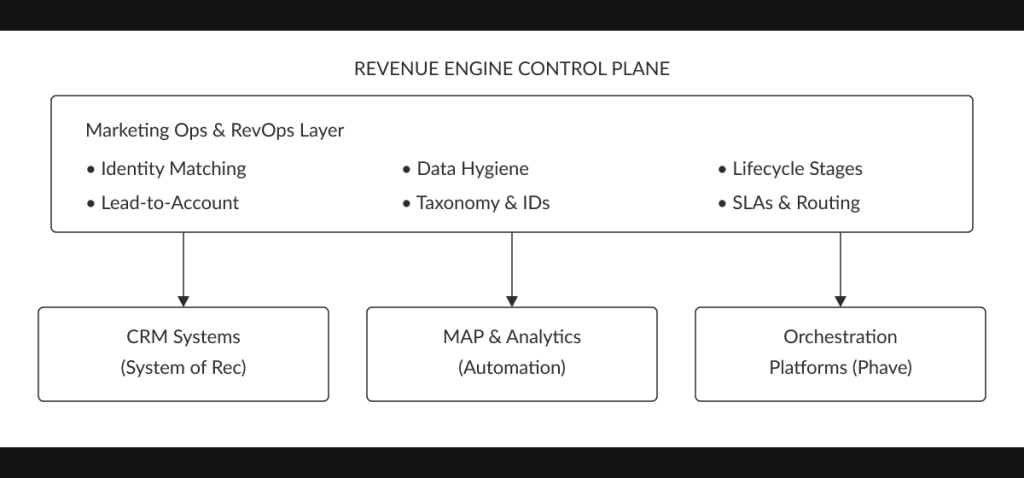
Key operational priorities include:
- Maintaining robust lead-to-account (L2A) matching and clear parent-child account hierarchies.
- Enforcing shared taxonomy for campaigns, program IDs, and journey stage definitions.
- Establishing clear bi-directional data flows across CRM, MAP, orchestration tools (like Phave), and sales execution platforms.
- Setting strict Service Level Agreements (SLAs) for account signal follow-ups, with feedback loops to capture disposition data (accepted, working, recycled, disqualified).
7. Build an Orchestration Stack, Not Just a Measurement Dashboard
Adding an analytics platform without changing execution workflows creates disconnected reporting. Technology platforms must address orchestration challenges by unifying intent signals, account engagement, and cross-channel execution paths into a centralized workflow that operates across the full techstack, using a unified data model.
When evaluating GTM technology, CMOs should look for platforms that integrate into the existing environment—delivering actionable insights directly within the tools where sales representatives and marketers operate daily.
8. Align Marketing Accountability with “Land & Expand” Growth
In subscription and expansion-oriented business models, securing the initial contract (“land”) is only the start of the customer relationship. GTM orchestration applies account-based discipline across the entire customer lifecycle:
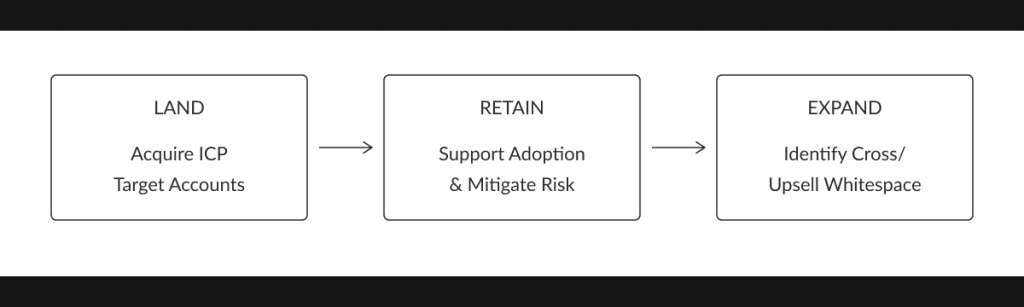
- Land: Align sales and marketing outreach to acquire target accounts with high expansion potential.
- Retain: Monitor product adoption signals, stakeholder changes, and executive alignment to identify and mitigate renewal risks early.
- Expand: Map whitespace within current accounts to deliver cross-sell and upsell plays triggered by expansion signals.
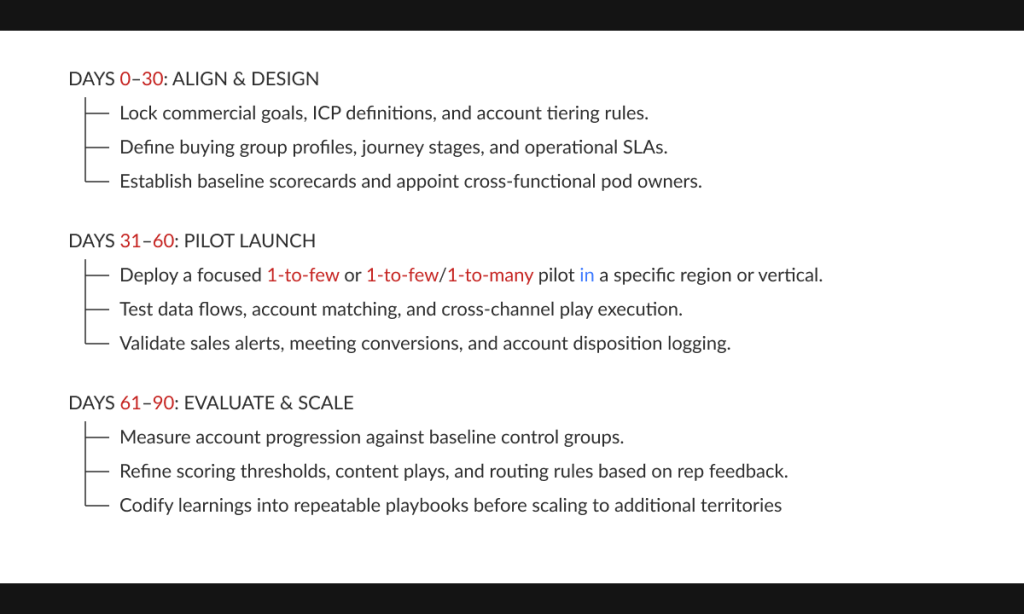
9. Execute a Focused 90-Day Transition Pilot
Transforming a complete GTM architecture overnight can disrupt existing operations. CMOs should pilot the orchestrated model in a defined segment before scaling.
10. Establish a Cross-Functional Operating Cadence
GTM orchestration relies on structured collaboration between Marketing, Sales, RevOps, and Customer Success. A multi-tiered cadence helps keep teams aligned:
- Weekly (Execution Pods): Campaign managers, field marketers, BDRs, and account executives review account-level signals, unworked alerts, upcoming touchpoints, and immediate next actions.
- Monthly (Program Operations): Marketing and sales leadership assess buying group coverage, pipeline velocity, channel efficiency, and data hygiene exception.
- Quarterly (GTM Governance): Executive leadership reviews account tiering capacity, budget allocations, attribution models, and strategic market expansion.
Conclusion: The Orchestrated Path Forward
Moving from contact-led lead generation to account-centric GTM orchestration requires an operational transition. It aligns strategy, data, channels, and teams around how modern B2B buyers actually purchase.
By focusing on buying group coverage, establishing robust control planes via Revenue Operations, leveraging modern orchestration technologies like Phave, and establishing a disciplined operational cadence, CMOs can build a scalable GTM engine that drives predictable pipeline and long-term customer value.
For additional frameworks, reverse-funnel planning tools, and detailed operating guides on modern B2B technology marketing, explore the resources available at b2btechmarketing.co.uk